
 Pin
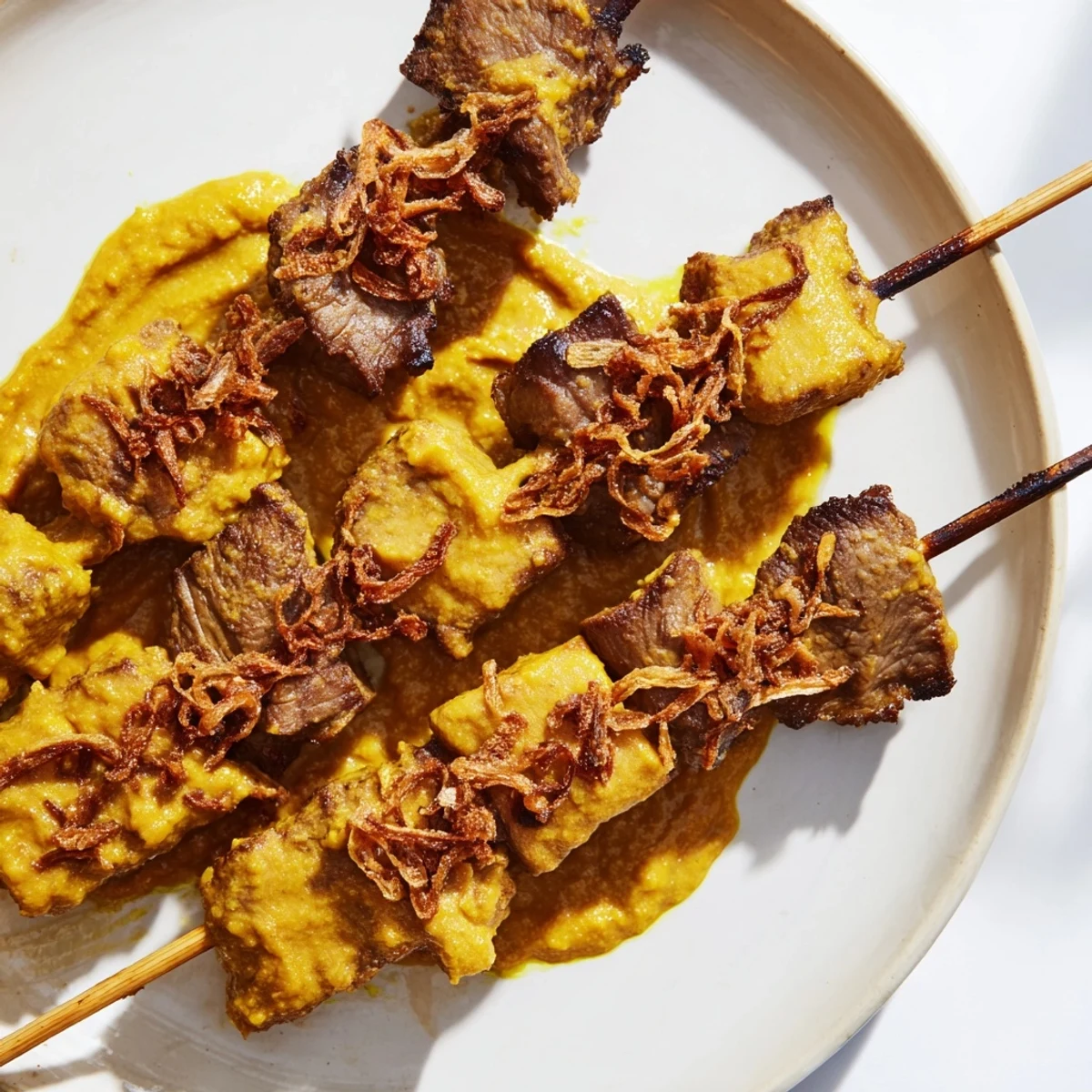
Pin Sate Padang features tender beef brisket or shank cubes, first boiled until soft with aromatics like bay leaves, kaffir lime leaves, and lemongrass. The beef is then threaded onto skewers and grilled over hot charcoal until slightly charred, developing that signature smoky flavor.
What sets this dish apart is the thick, rich sauce made from a spice paste blending shallots, garlic, red chilies, candlenuts, coriander, cumin, turmeric, ginger, galangal, and white pepper. The paste is sautéed until fragrant, then simmered with reserved beef stock and thickened with rice flour for a velvety consistency.
Traditionally served with sliced lontong (rice cake) and garnished with crispy fried shallots, Sate Padang balances tender meat, bold spices, and creamy sauce in every bite. Perfect for sharing, it's an authentic taste of Padang cuisine that brings the streets of West Sumatra to your table.
The first time I encountered Sate Padang was at a late-night street food stall in Jakarta, where the charcoal smoke hung thick in the humid air and the vendor's cleaver rhythmically chopped skewers against a wooden block. That sauce—dark, fiery, impossibly rich—clung to every cube of beef, and I found myself going back for seconds despite the heat making my eyes water. It took me years to realize the secret isn't just the spices, but that the beef gets boiled first in aromatics before it ever meets the grill.
Last summer I made this for a backyard barbecue, and my neighbor who swore he hated spicy food kept returning to the serving table until every skewer was gone. Watching guests tentatively try that dark yellow sauce, then immediately reach for more skewers to sop it up, reminded me why Sate Padang deserves a place in any home cooks repertoire. Now it's the request I get most often when the weather turns warm enough to fire up the grill.
Ingredients
- 600 g beef brisket or shank: These cuts have enough connective tissue to become meltingly tender during the initial boil, and they hold up beautifully on the grill without drying out
- 2 bay leaves and 2 kaffir lime leaves: These aromatic leaves infuse the boiling liquid with subtle citrus and herbal notes that permeate the beef deeply
- 2 lemongrass stalks: Bruise them with the back of your knife before adding to release their essential oils and lemony fragrance
- Shallots, garlic, and chilies: This trio forms the backbone of the spice paste, with shallots providing sweetness that balances the heat
- 2 candlenuts or macadamia nuts: These add a subtle richness and help thicken the sauce naturally—dont skip them
- Ground coriander, cumin, and turmeric: These warm spices give the sauce its characteristic yellow color and complex flavor profile
- Fresh ginger and galangal: Use fresh if possible, as they provide a bright, aromatic kick that dried versions cant match
- Rice flour: This traditional thickener creates a glossy, smooth finish without overpowering the spices
- Beef stock from boiling: Reserving this liquid is crucial—it carries all the beef flavor and aromatics into the final sauce
Instructions
- Boil the beef until tender:
- Combine the beef cubes with water, bay leaves, kaffir lime leaves, bruised lemongrass, and salt in a large pot. Let it simmer gently for 45 to 60 minutes until the meat is fork tender, then remove the beef while saving every drop of that flavorful broth.
- Prepare the aromatic spice paste:
- Blend the shallots, garlic, chilies, candlenuts, coriander, cumin, turmeric, ginger, galangal, and white pepper until you have a smooth, fragrant paste that will become the soul of your sauce.
- Grill the beef for smoky char:
- Thread the boiled beef onto soaked bamboo skewers and grill over hot charcoal or a screaming hot grill pan for 4 to 6 minutes. Turn them often and brush lightly with oil until you get those gorgeous charred edges that make street food so irresistible.
- Build the sauce:
- Heat oil in a saucepan and sauté the spice paste until it becomes deeply fragrant and the raw smell disappears. Pour in 400 ml of your reserved beef stock along with salt and sugar, then let it simmer until the flavors meld together.
- Thicken to perfection:
- Whisk rice flour with a little water to make a smooth slurry, then slowly stir it into your simmering sauce. Keep stirring for 3 to 4 minutes as it thickens into a glossy, velvety consistency that will coat every skewer beautifully.
- Bring it all together:
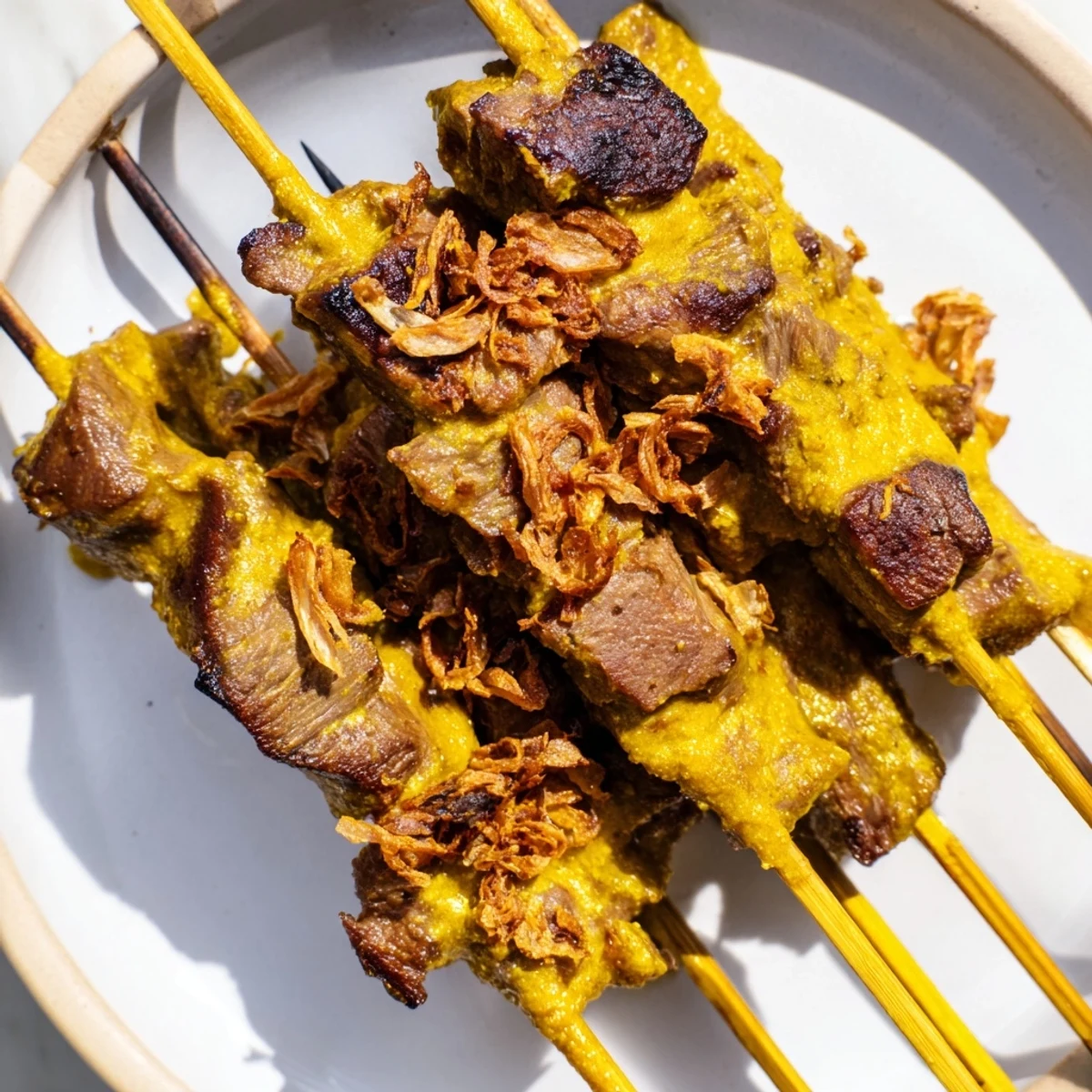
- Arrange those gorgeous grilled skewers on a platter and drench them generously with the hot, spiced sauce. Scatter fried shallots on top for crunch and serve alongside sliced rice cake if you want the full authentic experience.
 Pin
Pin Something magical happens when you pour that thick, yellow sauce over charred beef skewers—the steam rises carrying lemongrass and toasted spices, and suddenly your kitchen feels like a Padang street corner. My family now requests this for every celebration, and I've learned to make extra sauce because someone always wants to drizzle it over their rice.
Getting the Beef Just Right
The boiling step might seem unusual for skewers, but it's what makes Sate Padang special. I've tried skipping it and grilling raw beef, but the texture never achieves that perfect balance—tender enough to bite through easily, yet substantial enough to stand up to the bold sauce. The aromatics in the boiling liquid infuse the meat from the inside out, creating depth you can't achieve with marinade alone.
Mastering the Spice Paste
A good spice paste needs patience and a sharp blender. I've learned the hard way that adding a splash of oil helps everything move smoothly, and stopping to scrape down the sides ensures no chunky bits remain. When you sauté the paste, wait until it turns a shade darker and the raw smell disappears—that's when the true flavor begins to emerge.
Sauce Secrets
The rice flour slurry is the traditional way to thicken Sate Padang sauce, and I've found it creates a more authentic texture than cornstarch. Whisk it thoroughly so no lumps form, and add it slowly while stirring constantly—the sauce should coat the back of a spoon without being gloppy. If it gets too thick, a splash more stock will bring it back to the perfect consistency.
- Make extra fried shallots—they disappear fast and add essential crunch to each bite
- Let the sauce rest for 5 minutes off the heat before serving to let the flavors settle
- Keep skewers warm in a low oven while you finish the sauce so everything comes to the table hot
 Pin
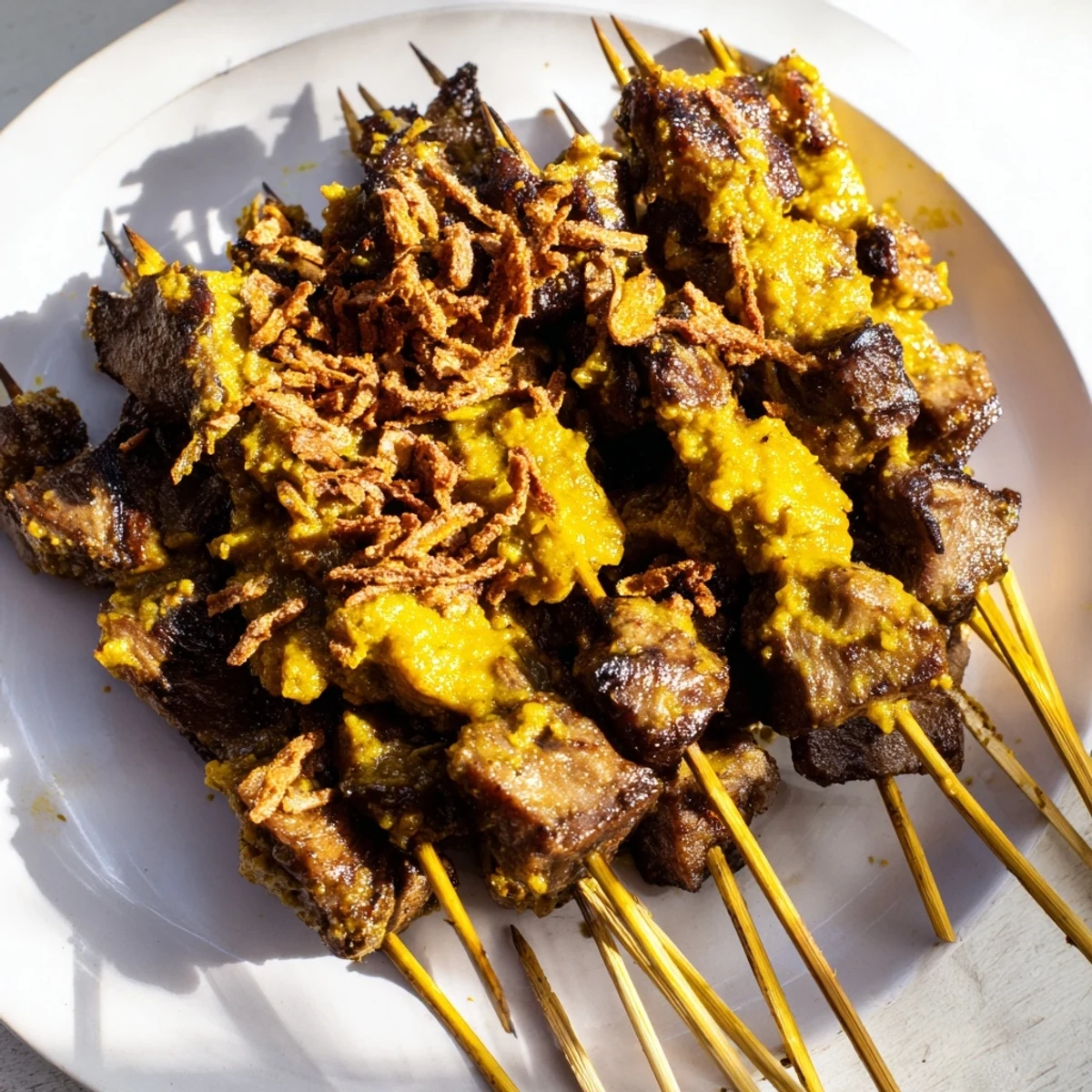
Pin There's something deeply satisfying about making a dish that carries centuries of tradition in every bite, especially one that transforms simple ingredients into something so extraordinary. I hope this recipe brings the vibrant flavors of West Sumatra to your table and creates memories that linger long after the last skewer is gone.
Recipe FAQs
- → What makes Sate Padang different from other satay varieties?
-
Sate Padang stands out for its thick, curry-like sauce made from a rich spice paste and beef stock, rather than the peanut-based sauces common in other Indonesian satays. The beef is boiled first for tenderness, then grilled for char, and finally drenched in the aromatic sauce rather than just dipped.
- → Can I use other cuts of beef for these skewers?
-
While brisket or shank are traditional because they become tender through boiling and have good flavor, you can use beef chuck, round, or even short ribs. Just adjust boiling time accordingly—fattier cuts may need less time while leaner cuts might benefit from longer simmering to ensure tenderness.
- → What can I substitute for candlenuts?
-
Macadamia nuts or cashews make excellent substitutes for candlenuts, providing similar richness and thickening properties to the sauce. Brazils or even almonds can work in a pinch, though the flavor profile will shift slightly.
- → How spicy is this dish?
-
The heat level depends entirely on how many chilies you include. With 3 seeded red chilies as written, it delivers moderate warmth that builds but isn't overwhelming. Reduce to 1-2 chilies for milder flavor, or leave seeds in and increase to 5-6 for authentic Padang heat.
- → Can I make the sauce ahead of time?
-
Absolutely. The sauce actually develops deeper flavor when made a day ahead. Prepare through step 5, cool completely, and refrigerate in an airtight container for up to 3 days. Reheat gently, adding a splash of water or stock if needed to adjust consistency, before pouring over freshly grilled skewers.
- → Is charcoal grilling essential?
-
While charcoal provides the most authentic smoky flavor, a hot grill pan or even broiler works well. The key is getting those char marks and slightly crispy edges on the beef. If using a grill pan, cook over high heat and avoid overcrowding to ensure proper searing.